

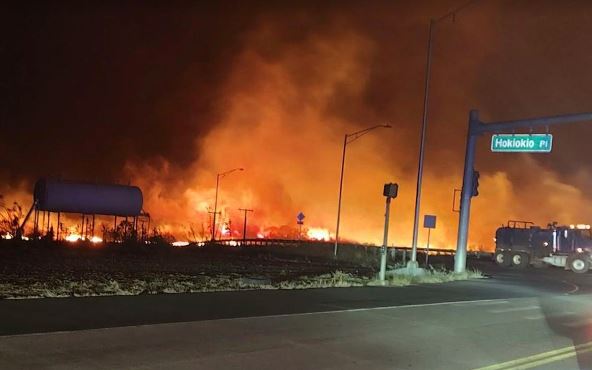
Hawaii faces an increasingly ominous adversary, wildfires. The recent ravaging of Maui serves as a stark reminder that climate change has made even the most paradisiacal locales and lush tropical places susceptible to wildfires.
The deadly wildfires have devastated the historic town of Lahaina, on the island of Maui.
More than 2,100 acres of Lahaina land were destroyed in the wildfires.
Wildfires require three things to ignite and eventually spread: fuel, heat and oxygen (commonly known as the fire triangle).
The composition of fuel (trees or vegetation in an area) influences how quickly a fire will spread.
Lahaina, the epicentre of the deadliest blaze on August 8, is one of the driest places in Hawaii because it is in the rain shadow of the West Maui Mountains.
In recent years, climate shifts, primarily driven by global warming, have led to prolonged droughts in Hawaii. This has led to a drier climate.
Hawaii was sandwiched between high-pressure to the north and a low-pressure system associated with Dora.
On August 7, the US National Weather Service issued a Red Flag Warning for fire risk in light of Dora’s winds and prevailing drought conditions.
This year, wildfires have caused widespread destruction globally.
(With inputs from agencies)