

Khabar Bureau
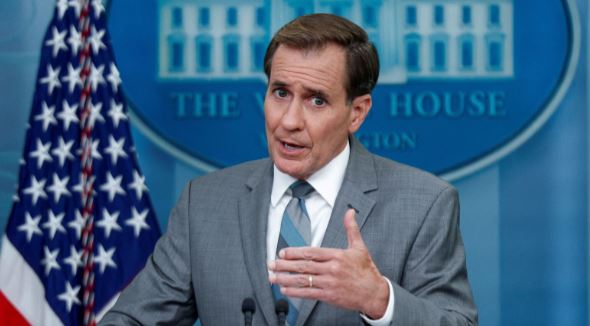
The US has shown quiet optimism about the possibility of having a joint declaration for the G20 Summit being held in India. However, Washington has also highlighted the problems that could lead to the G20 Summit ending without a joint communique as it signalled that it is difficult to get a consensus as countries like Russia and China are less likely to "sign on" it. When asked about the prospects of a joint communique at the upcoming G20 Summit in New Delhi, John Kirby, the National Security Council (NSC) Coordinator for Strategic Communication pointed out that the G20 summit may also end without a joint declaration as Russia and the West continue to spar over the Ukraine war among other issues.
He noted that countries like Russia and China have historically been less inclined to sign onto language that is in alignment with the rest of the international community. "We certainly hope so. But, I think you know it's difficult to get 20 clocks to chime at the same time; we're going to work on this. We know that the Indians also would like to see a joint communique...so we'll see where it goes," he said.
Ahead of the highly-anticipated meeting in the Indian capital G-20 Sherpas are making a last-minute attempt to reach a consensus over the proposed "Delhi Declaration" to be adopted at the summit.
Responding to a query by ANI regarding the US' optimism about the joint declaration in this G20, the top White House Official said that it is difficult to get "Twenty clocks to chime at the same time."
The G20 Sherpas are trying to iron out the final declaration that will be adopted by Prime Minister Narendra Modi and other leaders of G20 nations over the weekend. However, they face a tough challenge to create consensus.
The main issue is the Ukraine war with the Western countries and Russia not being able to see eye to eye on the matter. "Often times the sticking point tends to be the war in Ukraine because countries like Russia and China are less likely to sign on to language that the rest of the international community is more uncomfortable signing on to, so we'll see where it goes. But we'd like to see that, absolutely," he added.
Russian foreign minister Sergey Lavrov, who will represent Moscow at the meeting, said that Russia will block any summit Declaration that doesn't reflect Moscow's views on Ukraine and other crises. India insists that agreement on a final communiqu is within reach, despite geopolitical friction.
Speaking to PTI, a senior EU official said the Ukraine crisis is a priority for the European Union and Russia and China are increasingly "isolated" on the issue. "The EU can't accept any effort by Russia and China to move away from text that was used in G20 Summit in Bali to refer to the conflict," the official said.
Both Russia and China had agreed to the two paragraphs on the Ukraine conflict in last year's Bali declaration, but they backtracked from it this year creating difficulties for India.
At an online briefing, the EU official side-stepped questions on whether differences on the Ukraine crisis could hold up a consensus leaders' declaration. The G20 Sherpas' are currently holding negotiations to finalise the draft of the G20 leaders' declaration.
"The text as it is presented by the Indians now is not enough for the G7 and EU... because it is not going far enough," the official said.
The G20 Leaders' Summit is scheduled to take place on September 9 and 10 in India and US President Joe Biden is slated to attend the event. He will start his visit to India on September 7.
The G20 member countries represent around 85 per cent of the global GDP, over 75 per cent of the global trade, and about two-thirds of the world population.
The grouping comprises Argentina, Australia, Brazil, Canada, China, France, Germany, India, Indonesia, Italy, Japan, the Republic of Korea, Mexico, Russia, Saudi Arabia, South Africa, Turkey, the UK, the US and the European Union (EU).
(With inputs from agencies)