

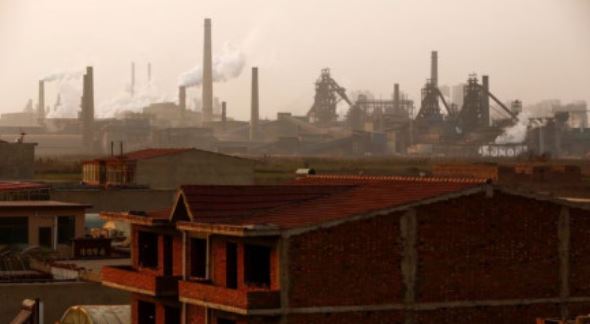
China's factory-gate prices experienced their sharpest decline in seven-and-a-half years in June, indicating a weakening demand for industrial and consumer products and highlighting concerns about the country's economic health. This data cited by Reuters, combined with the slowest consumer inflation since 2021, has intensified the call for policymakers to implement additional stimulus measures to revive sluggish demand.
According to the National Bureau of Statistics (NBS), the producer price index (PPI) recorded its ninth consecutive monthly drop in June, down 5.4 per cent compared to the previous year. This decline surpasses the 4.6 per cent decrease observed in the previous month and the 5.0 per cent projected by analysts in a Reuters poll. This steepest decline in the PPI since December 2015 reflects weakened domestic and foreign demand, particularly in the energy, metals, and chemicals sectors.
In contrast, the consumer price index (CPI) remained unchanged year-on-year in June, in contrast to the 0.2 per cent increase observed in May. This was mainly driven by a faster decline in pork prices. The result fell short of the expected 0.2 per cent rise and marked the slowest pace since February 2021. These lower-than-anticipated inflation figures negatively impacted financial markets, leading to a depreciation of the yuan and a decline in Asian stocks.
Economists at Capital Economics anticipate that headline inflation will rise to approximately 1 per cent by the end of the year. Nevertheless, they believe this increase will be moderate and not hinder the ability of the People's Bank of China (PBOC) to further loosen its monetary policy. They argue that fiscal policy will be the primary source of support, considering weak credit demand and currency pressure. They project a minimal additional policy rate cut of only 10 basis points for the remainder of the year. Beijing's target for average consumer inflation in 2023 is around 3 per cent, following a 2 per cent year-on-year price increase in 2022.
China recently implemented policy rate cuts and pledged additional measures to boost liquidity and stimulate household consumption. However, Reuters cited analysts, such as Bruce Pang, Chief Economist at Jones Lang Lasalle, who attributed the accelerating decline in the PPI to the weakened real estate and construction sectors and the strength of industrial production. Pang anticipates that the year-on-year decline in the PPI has likely reached its lowest point and expects a gradual narrowing in the year's second half.
Reuters also cited analysts who predicted further cuts in lending rates by China's central bank. They also expect reductions in the reserve requirements ratio and interest rates in the second half. However, economists caution that small rate cuts may not significantly impact loan demand as households and businesses focus on repairing balance sheets damaged by the COVID-19 pandemic and repaying debts. Consequently, Beijing will likely rely on fiscal stimulus and other measures to stimulate demand.
(With inputs from agencies)