

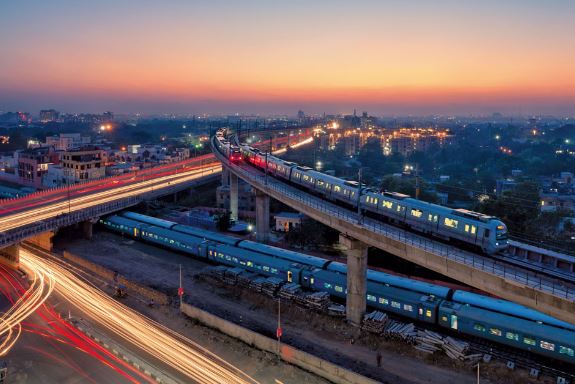
Urban infrastructure and railways may get more than 70% share of the mobility-related investment that government envisages in next 25 years. During the past two-and-a-half decades, the government put more thrust on the road and highways sector, which resulted in roads becoming the most preferred mode for freight transport.
The plan also envisages developing seven Hyperloop lines, including two for cargo transport, and increasing the average speed of intercity transport by 2-3 times. The current average speed is close to 24 kmph. To meet this target, the plan draws the road map for increasing the length of expressways and accesscontrolled highways to 32,000km from the current 320 km and augmenting the port capacity to handle cargo by fourfold, from 2,500 million tonnes per annum (MTPA) to 10,000 MTPA by 2047.
The document, which was presented at a recent meeting chaired by cabinet secretary Rajiv Gauba, has set a target to expand the Metro rail and other mass rapid transit system network to 5,000 km across 75 cities compared to the current cumulative length of 754 km in 27 cities.
(With inputs from agencies)