

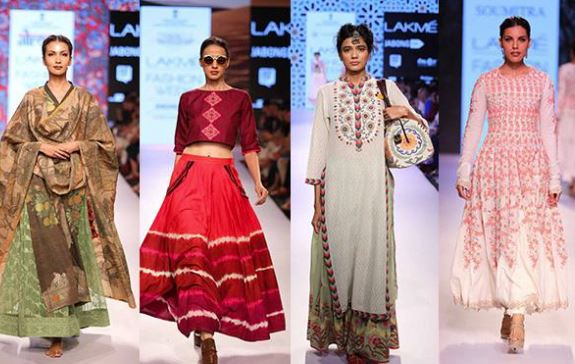
“I am confident that the handloom sector will keep contributing to the building of an Atmanirbhar Bharat '', said Prime Minister Shri Narendra Modi in his tweet. This zeal of the Prime Minister to make India self-sufficient and self-reliant by promoting authentic Indian hand woven and hand-crafted apparel designs nationally as well as internationally has helped in blooming the eco-friendly, sustainable and yet economical form of clothing.
PM Narendra Modi who in his own words is “motivated by Gandhi Ji’s emphasis on duties in addition to rights as well as the importance he attached to encouraging products made by our hardworking fellow citizens'' values handcraftmenship and hand weaving. Like Mahatma Gandhi who introduced Khadi fabric to India from his Sabarmati Ashram in year 1917 and influe
nced the people to boycott foreign factory-made clothes and adopt “swadeshi” hand spun khadi, Modi also continues to urge people to use khadi and inculcate some items of clothing made with khadi fabric in one’s wardrobe.
“Khadi is merely a ‘vastra’ but a ‘vichar’. The younger generation is widely attracted to khadi.” The development in the designs and aesthetics of khadi apparel and clothing has led to the increased interest of youngsters towards these products such as khadi kurtas, pants, tote bags and bandanas. The increased awareness amongst the youth about sustainable and economical clothing in addition to the understanding of the Swachh Bharat Abhiyan by the PM under which the people are made conscious about eco-friendly ways of lifestyle, has played a great role in the increased demand of hand-woven garments. Through the power of education and various schemes by the government the youth has been educated about waste management and non-decomposable articles such as synthetic fibers or factory-made fabrics, prepared by the use of chemicals, that are harmful for the environment due to which there is an inclination towards natural fabrics and eco-friendly disciplines of fiber.

The property of Khadi to provide warmth in winters and remain cool in summers makes it economical and dime-worthy. It reduces India’s dependency on foreign countries for apparel and clothing needs, hence reduces the revenue flow to other countries in turn helping our own weavers. The flourishing of the textile industry in India helps the thousands of poor weavers, mainly women and elderly who work in this industry and depend on it for their living. “Handlooms manifest India’s diversity and dexterity of countless weavers and artisans” said PM Modi in one of his tweets. According to him, the use of handloom in India will ensure the wellbeing of the weaker sections of the society as the livelihood of more that twenty-seven lakh households depend on handloom. The adoption of handloom in India is a step towards curing the biggest problems of the country, poverty.

India is a diverse country with varied cultures and traditions which adds to the different types of attire and folk costumes. The handloom and hand craftsmanship differs with the change in geography. From Pashmina Silk of Jammu and Kashmir to Kanjivaram Silk of Kanyakumari in Tamil Nadu, India has a diversity of handloom fabrics. Muga, “the golden silk” from Assam, the Jamawar shawls from Kashmir, the Kalamkari (hand-made designs) on sarees in Andhra Pradesh, the gorgeous Pitala sarees, the everyday attire of women in Odisha, are all the delicacies and pride of the nation which needs showcasing at global level.
The Indian tie and dye are particularly famous amongst foreign buyers. Exhibitions and fairs help attract international consumers and increase the demand of Indian fabric in global markets. In addition to this several schemes like National Handloom Development Programme (NHDP), Comprehensive Handloom Cluster Development Scheme (CHCDS), Handloom Weavers’ Comprehensive Welfare Scheme (HWCWS) and Yarn Supply Scheme (YSS) has been launched by the government to protect the handloom industry of the country. One of the initiatives by the government-Make in- emphasized on making India self-reliant by industrialization and boosting production in the country has helped in the flourishing of the handloom industry.

“Handlooms can enrich our daily lives and surroundings in many ways; from clothing to furnishing to masks in Covid times to wall hanging. With the ongoing efforts of the government, the handloom industry requires support from the country of its origin. As Indians we must embrace the legacy of our nation, our handloom.