

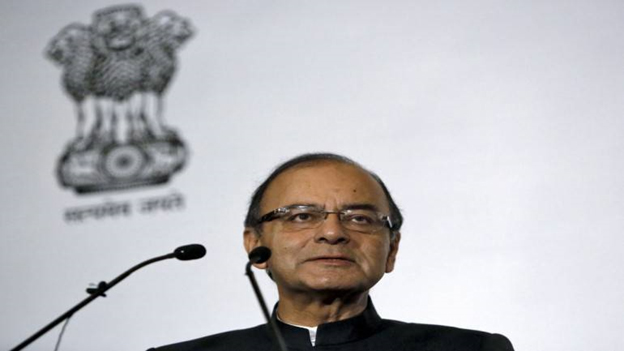
New Delhi: Union finance minister Arun Jaitley while speaking largely in the context of India’s crisis-prone agriculture said that benefits from populist policies are short-lived and subsidies alone can’t sustain a sector for long, unless “blended” with investments.
Jaitley was speaking largely in the context of India’s crisis-prone agriculture, while releasing the book, “Supporting Indian Farms the Smart way” by economists Ashok Gulati, Marco Ferroni and Yuan Zhou, but his comments also come on the back of political demands to ease sharply rising fuel prices by cutting taxes. A large hike in minimum support prices announced in July by the central government itself forms a big part of farm subsidies.
“How do we choose between when to stop at subsidies and when to concentrate on investment and I think that’s an eternal choice before policymakers,” he said. Making a case for a focus on investments rather than only subsidies, the finance minister said the country’s public expenditure traditionally was geared more towards subsidies because of cash crunches. That’s not the case anymore. “The state of inadequacy of resources in India which used to be cited as a reason for limiting investments…I think we are growing out of it,” he said.
Governments — in states and at the Centre — are armed with more resources because of greater tax compliance and increasing formalisation of the economy, he said. “Public discourse occasionally gets impacted by populism; it gets impacted by sentiments that a particular move will generate, even though the impact of that move or that policy or decision will not be long-lasting enough.”
The book by edited by Gulati, chair professor at the think-tank ICRIER, concludes that farmers are tied to poor incomes mainly because of higher spending on inefficient subsidies but declining capital investments, frequent ban on farm exports and low spending in research for new technologies in agriculture.