

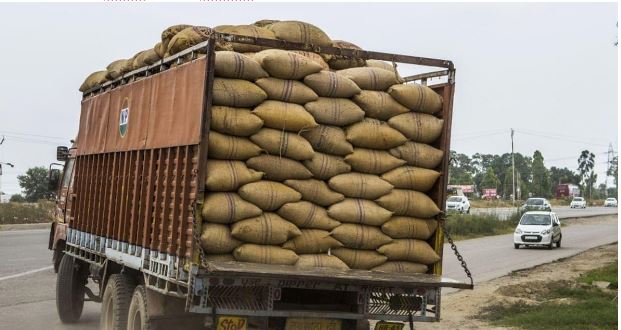
A reduction in fertiliser subsidy by around Rs 35,000 crore as announced in the Union Budget is expected to hit Punjab real hard. The state, which is one of the highest per hectare consumers of fertilisers in the country, is set to lose almost Rs 3,141 crore on subsidy and this burden is likely to get transferred to farmers.
The subsidy amount on fertilisers has been slashed from Rs 1,40,122 crore in the 2021-22 budget to Rs 1,05,222 crore in the current budget 2022-23 presented on Tuesday. This is a reduction of around Rs. 34,900 crores (25 per cent).
Punjab -- with just 1.53 per cent area of the country -- has been using around 9 per cent of the total fertilisers, which include di-ammonium phosphate (DAP), urea, Muriate of Potash (MOP) and Super, used in India. It is one of the highest usage per hectare. Punjab's loss would come to around Rs 3,141 crore, which is 9 per cent of the total reduction of Rs 34,900 crore in the subsidy amount.
Experts said even this amount may go up if fertiliser rates go up and that is quite likely due to rising rates of fertilisers in the international market.
Currently in Punjab, there is a total subsidy of around Rs 16,800 per metric tonne on urea. As a result, farmers were paying Rs 5,911 per metric tonne for urea which means Rs 266.50 paisa per 45-kg bag. The subsidy amount comes to Rs 760 per 45-kg urea bag. Similarly, farmers were paying Rs 1,200 per 50-kg bag of DAP after getting Rs 1,650 subsidy per bag.
Dealers of fertilisers said that due to elections the government had increased subsidy on DAP a few months back otherwise this 50-kg bag would have cost farmers Rs 1,900. “In international market the rate of DAP has increased manifold and if our company imports it today that it will cost Rs 3,750 per 50-kg bag and the rate will not come down. In such a situation when the government is slashing the budget on fertilisers, it only that means its MRP will increase and farmers will have to shell out much more on fertilisers now,” said Kaushal Gupta of Nav Durga Traders, a dealer of fertilisers in Malsian (Jalandhar).
"When the government has decreased total subsidy budget amount on fertilisers, then certainly farmers need to pay more from their pockets even if the rates of fertilisers remain same and if the rates go up, it would cost them even more," added Gupta.
Farmer Gurdip Singh said: "Government is heading towards putting more and more burden on the farmers by decreasing subsidies and increasing taxes."
Joint Director Fertilisers (Punjab) Dr J P S Grewal argued that declaring subsidy on fertilisers means that Punjab will have to lose its subsidy amount percentage according to its total usage.
He said that government is stressing on using organic and liquid fertilisers instead chemicals, because of which subsidy for chemical fertilisers is being decreased.
Another senior Agriculture Department officer in the state said that Punjab is not prepared to switch to organic products on vast areas under cultivation, and as a result it has to face losses on subsidy as per its consumption rate.
The state consumes around 33-34 lakh metric tonnes (LMT) of fertiliser annually, which includes 5.50 LMT DAP in both Rabi and Kharif seasons and around 26-27 LMT of urea in both seasons.
Apart from this, 1.80 LMT of MOP and Super are used across the year. Overall, Punjab's farmers use 243 kg fertilisers per hectare per year.
Pesticides and Fertilisers Association (SPFA), Punjab, state president Mohinder Pal Singh Khalsa, said that decreasing subsidy amount would burn a hole in farmers’ pockets.
(With inputs from agencies)