

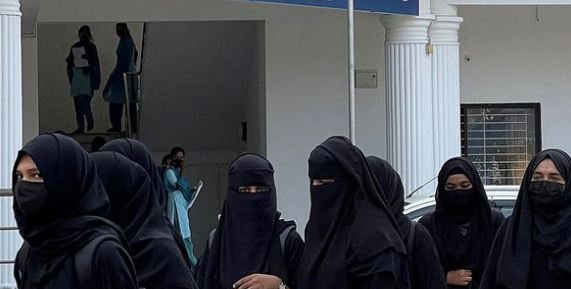
Though the Supreme Court on Thursday delivered a split verdict on students’ right to wear hijab in school, both judges on the Bench seemed to agree that believers or worshippers are the best persons to interpret whether a practice is essential to their religion or not.
The Karnataka High Court had concluded that wearing hijab was not an essential religious practice (ERP) in Islam.
In his opinion, Justice Hemant Gupta said the “practice of wearing hijab may be a ‘religious practice’ or an ‘essential religious practice’ or it may be social conduct for the women of Islamic faith. The interpretations by the believers of the faith about wearing of headscarf is the belief or faith of an individual”.
But the judge was categorical that such a “religious belief” cannot be carried to a “secular school” maintained out of government funds and the State of Karnataka was right in issuing its February 5 government order restricting the wearing of hijabs at schools.
Justice Gupta said in the present case students wanted to “subjugate their freedom of choice of dress to be regulated by religion than by the State while they are in fact students of a State school”.
“The equality before law is to treat all citizens equally, irrespective of caste, creed, sex or place of birth. Such equality cannot be breached by the State on the basis of religious faith… A student cannot claim the right to wear a headscarf to a secular school as a matter of right,” Justice Gupta wrote.
Justice Dhulia, in his divergent opinion, said the issue whether wearing hijab was an essential religious practice in Islam was wholly irrelevant in the case.
He said the court, as a secular institution, should steer clear from choosing one among many possible interpretations of theological doctrine. In fact, the court “must defer to the safer course of accepting the faith and belief of the worshipper”.
(With inputs from agencies)