

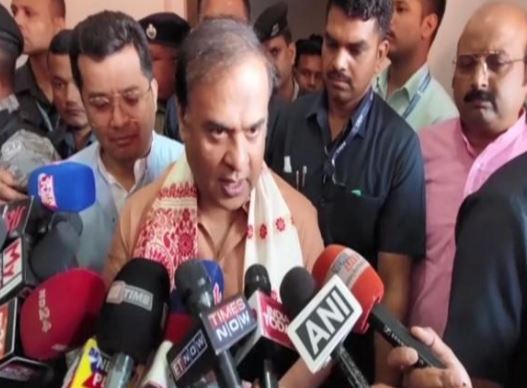
Assam chief minister Himanta Biswa Sarma on Sunday once again criticised his Delhi counterpart Arvind Kejriwal over his remarks on the recently released movie The Kashmir Files, asking him not to be "anti-Hindu". Kejriwal, in his speech in the Delhi assembly, had accused the BJP leaders of "promoting" the movie and asked the makers of the movie to upload the film on YouTube. His statement has snowballed into a massive backlash on social media, with several BJP leaders hitting out at him.
The BJP attacked Kejriwal for making several movies in the past tax-free in the national capital but not the Vivek Agnihotri film.
"You make it tax-free or not, you do not have the right to humiliate and insult us. You may do whatever you want, but do not be 'anti-Hindu' so openly. If our Hindu samaj (society) is in this condition, it is because we are more anti-Hindu within the Hindu family. Otherwise, Hindu civilisation once used to show the path to the world," news agency ANI quoted Sarma as saying.
Questioning Kejriwal's interest in making the Anupam Kher-starrer film free for everyone on YouTube, Sarma said, "He has made several movies tax-free in Delhi. I want to ask him why did he not ask to upload all those movies on YouTube? Why do you have interest only in The Kashmir Files being uploaded on YouTube?"
On Friday, the Assam CM had accused Kejriwal of using the Delhi assembly "to rub salt in the wound of Hindus".
"If you don't want to make #KashmirFiles tax-free, don't. But stop this constant mocking of Kashmiri Pandits. Their sufferings are a result of such condescending attitude & appeasement politics of secularists. It doesn't behove a CM to use the Assembly to rub salt in the wound of Hindus," Sarma said.
The Kashmir Files has been declared tax-free in several states including UP, Bihar, Uttarakhand and Himachal Pradesh.
The Kashmir Files, released in theatres on March 11, depicts the exodus and killings of Kashmiri Pandits from the Valley in the 1990s.
(With inputs from agencies)