
213

RBI’s new norms may lead to surge in NBFC bad loans

In a move that could result in more non-banking finance companies’ loans being categorised as NPAs and raise provisioning requirements, the RBI has tightened NBFC asset classification norms. The guidelines, which come into effect on March 30 next year, bring the NBFC classification norms on a par with that of banks.

The guidelines were notified by the central bank in the form of clarification on its prudential norms on income recognition, asset classification and provisions (IRACP) pertaining to advances. “To ensure uniformity in the implementation of IRACP norms across all lending institutions, certain aspects of the extant regulatory guidelines are being clarified and/or harmonised, which will be applicable to all lending institutions,” the RBI said in its circular.
193

Tata Steel consolidated net jumps over 7 times

Tata Steel on Thursday reported a 7.5-times jump in its consolidated net profit for the quarter ended September 30, 2021. The sharp increase in profits was supported by higher realisations and sale of Singapore entity NatSteel Holdings, even as steel deliveries declined in a seasonally-weak quarter.

The company's net sales for the period increased 55% year-on-year to Rs 60,283 crore. Steel deliveries declined nearly 7% y-o-y during the quarter to 7.39 million tonne. Sales volume of the automotive segment increased by 18% sequentially, despite the semiconductor shortage driven weakness in the sector.

173

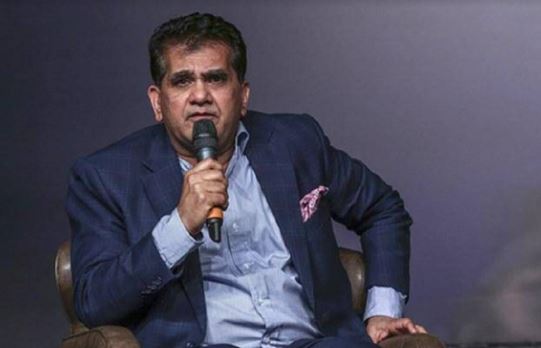
Higher growth hinges on digital, green tech, says NITI Aayog CEO

In order to achieve higher growth, India needs to focus on the power of digital and green technologies to ensure sustainable development for over three decades, said Amitabh Kant, NITI Aayog CEO.

Delivering lecture at the Indian Institute of Management, Ahmedabad (IIMA), Kant said that with a view to lift people from poverty line, India needs to grow at 9-10% rate constantly and must get into sunrise areas, including electric vehicle battery storage, artificial intelligence (AI), machine learning, renewable energy, green hydrogen, green ammonia, 5G technology, etc, rapidly.

The way India could cut the cost of solar energy production to Rs 1.99 per kWh from as high as Rs 19 per kWh, the nation needs to work on bringing the green hydrogen cost down to $1 per kg from existing $4 per kg, he said, adding, "India is in the process of going green. The nation is expanding its RE capacity to110 GW. The nation is envisaging to become non-fossil fuel by the year 2047.

153

Tata Group likely to sell its non-core real estate assets: Report

In a bid to build a cash reserve without opting for a debt instrument, the Tata Group is planning to sell the non-core real estate assets owned by its operating companies. According to a report by a buiness daily, the company is considering selling its residential and commercial real estate assets.

The report adds that Tata Sons Limited, the holding company of India’s largest conglomerate, has already involved consultants to identify and value the group’s non-core real estate assets in India and abroad. Through this exercise, the company hopes to raise at least a few thousand crores of rupees.

Meanwhile, Tata Group-owned Indian Hotels Company Limited, the country’s second-largest hotel chain, on Tuesday set its rights issue price at Rs 150 per share. The issue will open on November 24 and close on December 8. Through this, the company plans to raise Rs 1,982.10 crore from eligible shareholders.

103

Elucidating debate on central and state taxes on petrol and diesel

On November 3, the union government announced a cut in special excise duty on petrol and diesel by ₹5 and ₹10 respectively. The announcement also urged states to do the same . “States are also urged to commensurately reduce VAT (value added tax) on petrol and diesel to give relief to consumers” a press release from the union finance ministry said. Another release, issued by the ministry of petroleum on November 5, listed 14 states and union territories which had not reduced their VAT on petrol and diesel. Almost all of these states are ruled by non-NDA parties. Are these states not cooperating with the centre in bringing down inflation?

There is a difference between central and state taxes on fuel