
711

#CovidMeet: PM Asks Opposition States To Reduce Vat On Fuels; CMs Hit Back

Prime Minister Narendra Modi on Wednesday invoked cooperative federalism to urge opposition-ruled states to provide consumers relief from high fuel prices by reducing VAT (value added tax) on petrol and diesel in step with the excise duty reduction by the Centre in November last year.

"Many states like, Maharashtra, West Bengal, Telangana, Andhra Pradesh, Tamil Nadu, Kerala, Jharkhand did not agree to our request for some reason or the other, and the burden on the people of these states continued," he said during a virtual meeting with CMs to discuss the Covid situation. Pointing out the economic challenges arising from the Russia-Ukraine conflict, he said, "I request all states that during the current global challenges, we should work as a team in line with the ethos of cooperative federalism."

The states that reduced VAT on petrol and diesel (by Rs 5 and Rs 6 a litre, respectively) are estimated to have forgone revenue of around Rs 16,000 crore between November and March. On its part, the Centre is seen to have taken a monthly hit of around Rs 8,700 crore as it lowered excise duty on petrol by Rs 5 a litre and on diesel by Rs 10 a litre.
611

#UN: UNGC Adopts Veto Draft, India Regrets Lack of Inclusivity

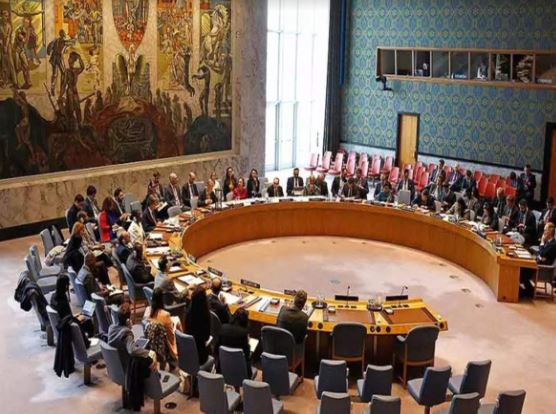
The UN General Assembly adopted by consensus a resolution seeking justification for the use of veto power by any P-5 country. The resolution was seen as an attempt to discourage Russia's use of its veto power, which Moscow has exercised more than any other permanent member of the UN Security Council (more than 20 times since 2010) in the recent past. Russia is learnt to have said it would have no problem explaining use of veto if the resolution was adopted by consensus.

The provocation for the resolution, which was introduced without proper consultations with all member-states, was Russia vetoing a resolution in the Council that deplored its actions in Ukraine. India, along with other countries, would have abstained if the resolution had been put to vote. Despite the consensus, many countries, including India and China, expressed concern over the manner in which the resolution was introduced. India said it had several concerns about the initiative.

561

#Russia-Ukraine: 'War Threatens India's Regional Security Too': European Commission Chief in Delhi

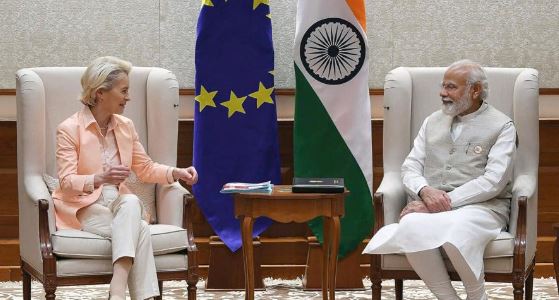
European Commission chief Ursula von der Leyen, who is on a visit to India, on Monday said Russia's invasion of Ukraine “threatens India's regional security” as well. “The outcome of the war will not only determine the future of Europe but also deeply affect the Indo-Pacific region,” she said during the Raisina Dialogue - an annual geopolitical conference.

Focusing on Russia and China's “seemingly unrestrained” relationship, she warned that the war has further consequences. "Russia and China have forged a seemingly unrestrained pact. “They have declared that the friendship between them has 'no limits'... What can we expect from the 'new international relations' that both have called for?,” she added.

511

#Indo-China: India Retaliates, Suspends Tourist Visas of Chinese Nationals

India has suspended tourist visas issued to Chinese nationals. This information has been shared by the global airline body, International Air Transport Association (IATA)  with its member carriers.

India has taken this step after China had reportedly blocked the entry of around 22,000 Indian students studying in the Chinese universities. They are unable to attend their physical classes due to Chinese entry restrictions.

For two years the Indian students had been taking online classes as physical classes were not taking place. But now when the university campuses are back with the physical classroom teaching they are finding it hard to return to China due to restrictions imposed by the Chinese government on the entry of Indian students.

411

#India-Russia: India’s Position On Russia Well Known And It Won’t Change, Endorses BoJo

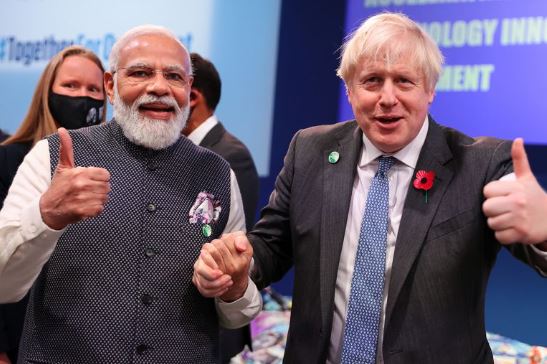
India’s position historically on Russia is well known and they are not going to change that, UK PM Boris Johnson said after his summit meeting with PM Narendra Modi on Thursday. The meeting, foreign secretary Harsh Shringla said, included talks on the Ukraine issue on “convivial terms”.

Providing India’s version of the conversation, Shringla said Modi explained India’s position very clearly and there was no question of any pressure from the UK on energy ties with Russia. “PM Johnson explained UK’s position but there was no pressure. PM Modi said India wants dialogue and peace between Russia and Ukraine and that the conflict must stop. PM Modi emphasised on the resolution of the conflict in a manner that is satisfactory and said India is ready to do anything to facilitate peace and dialogue,” said Shringla.