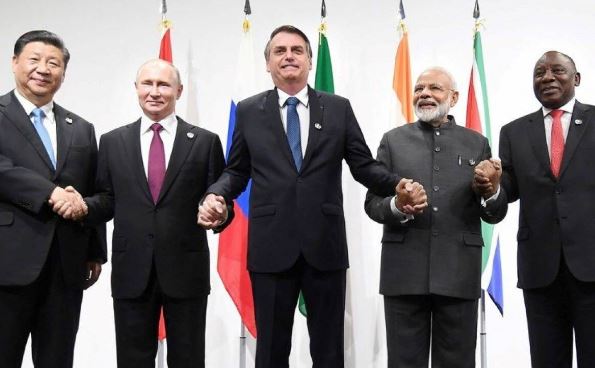
Afghanistan is missing from the BRICS declaration, but the document mentioned the “legitimate” aspirations of India, Brazil and South Africa to be part of the UN Security Council, acknowledged G20 as a premier multilateral forum and called the Russia-Ukraine war a “conflict” this time instead of “situation”.
These are some of the key takeaways emerging from the BRICS leaders’ summit in Johannesburg as tough diplomatic negotiations and the informal meeting between Prime Minister Narendra Modi and Chinese President Xi Jinping played out in the run-up to the declaration.
On UN Security Council reforms, the BRICS declaration introduced the phrase “legitimate aspirations” and the word “democratic” in the paragraph. Last year, BRICS had merely talked about “aspirations” of India, Brazil and South Africa and making the UNSC “representative, effective and efficient”.
It said: “We support a comprehensive reform of the UN, including its Security Council, with a view to making it more democratic, representative, effective and efficient, and to increase the representation of developing countries in the Council’s memberships so that it can adequately respond to prevailing global challenges and support the 3 legitimate aspirations of emerging and developing countries from Africa, Asia and Latin America, including Brazil, India and South Africa, to play a greater role in international affairs, in particular in the United Nations, including its Security Council.”
On the issue of the Russia-Ukraine war, the BRICS declaration used the word “conflict in and around Ukraine”, instead of last year’s formulation of the “situation in Ukraine” .
“We recall our national positions concerning the conflict in and around Ukraine as expressed at the appropriate fora, including the UNSC and UNGA. We note with appreciation relevant proposals of mediation and good offices aimed at peaceful resolution of the conflict through dialogue and diplomacy, including the African Leaders Peace Mission and the proposed path for peace,” the declaration said this time. There was, however, no mention of the Black Sea Grain Initiative which was an important issue this time.
Afghanistan’s absence from the declaration shows how the Taliban-ruled country is no longer a major geopolitical priority after the chaotic exit of the US. BRICS is instead now focussed on the pressing challenges facing the world economy after the pandemic and the consequences of Ukraine war.
Afghanistan was a noteworthy miss in the 94-paragraph declaration running into 17 pages, especially considering that there was an extensive paragraph on it in the June 2022 declaration.
Last time, the BRICS declaration had said it strongly supports a peaceful Afghanistan while emphasising on national reconciliation, an inclusive political structure and rights of all Afghans including women and children. It said Afghan territory should not be used for acts of terror.
BRICS — largely portrayed as an anti-West platform — acknowledged G20 as a “premier multilateral forum” and the “Indian Presidency” this time. It helped that two more BRICS countries — Brazil and South Africa — will preside over the G20 in 2024 and 2025, respectively.
“We reaffirm the importance of the G20 to continue playing the role of the premier multilateral forum in the field of international economic and financial cooperation... We note the opportunities to build sustained momentum for change by India, Brazil and South Africa presiding over the G20 from 2023 to 2025,” the declaration said.
(With inputs from agencies)