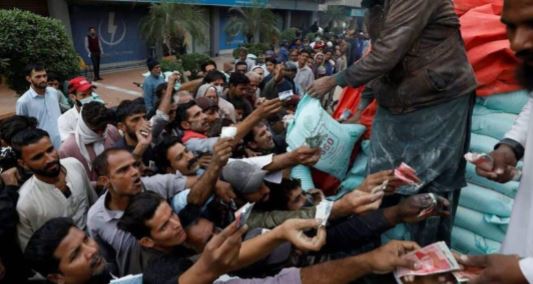
According to Moody’s Investor Service, Pakistan’s funding choices beyond June make it possible for it to default without a bailout from the IMF.
“We consider that Pakistan will meet its external payments for the remainder of this fiscal year ending in June,” Grace Lim, a sovereign analyst with the ratings company in Singapore told the media.
“However, Pakistan’s financing options beyond June are highly uncertain. Without an IMF program, Pakistan could default given its very weak reserves.”
The Washington-based lender’s $6.5 billion bailout programme for Pakistan has stalled as a result of the government’s failure to comply with several loan requirements, and Pakistan is currently struggling to resume it.
The possibility of a delay in a loan from the IMF has been increased by political unrest in Pakistan ahead of this year’s elections. The arrest of former premier Imran Khan by the Pakistan Army and the subsequent violence across Pakistan has not helped matters.
On Tuesday, the indicated price for dollar bonds due in 2031 was 34.58 cents on the dollar, almost the lowest price since November. The value of the rupee has been close to a record low.
In response to inquiries on Monday, Lim stated in an emailed answer that an engagement with the IMF past June would encourage additional financing from other multilateral and bilateral partners, which might lower default risk. The current level of $4.5 billion in foreign exchange reserves in Pakistan is still quite low and barely covers around one month’s worth of imports.
According to S&P Global Ratings, Pakistan’s gross external finance needs as a percentage of current-account receipts plus useable reserves are expected to increase from 133% in fiscal year 2023 to 139.5% in fiscal year 2024.
“We consider the IMF program to be a foundation for important fiscal policy reforms,” said Andrew Wood, a sovereign analyst at S&P in Singapore. “Agreement on the current review cycle could also coalesce more confidence for other bilateral and multilateral lenders to Pakistan.”
(With inputs from agencies)