Indian scientists extract record uranium from seawater that could power nuclear plants
But wait. Isn't nuclear power a renewable source of energy? Well, kind of. Let us explain.
Nuclear power, mostly used in the production of electricity, is widely considered to be a renewable source of energy. However, the raw material that is used to generate nuclear power through a process called fission is non-renewable. Nuclear power plants need a specific form of uranium called Uranim-235.
Now, this is a depleting resource. Uranium reserves found naturally are on a course to reach exhaustion within a century, which means that countries will have to look for alternatives to generate this critical element that powers nuclear plants across the world. The world at the moment has a nuclear reserve of 7.6 million metric tons.
Seawater contains 4.5 billion metric tons of uranium. (Photo: Reuters)
In an attempt to address this worry, a group of scientists at the Indian Institute of Science Education and Research (IISER), Pune, attempted to extract uranium from seawater. Their attempts were successful and the findings were published in the journal Royal Society of Chemistry.
"With rising global energy demand and environmental concerns associated with fossil fuels, sustainable energy supply to the global community remains a great challenge. Large-scale uranium extraction from seawater (UES) is widely considered as reconciliation to increasing global energy demand and climate change crises," the scientists said in their paper.
Researchers estimate that seawater contains 4.5 billion metric tons, nearly 1,000 times more uranium that conventional sources. But, with existing technologies, we are far from extracting this element from seawater cost effectively. Experts have said that uranium recovery from seawater is extremely challenging due to its very low concentration in comparison to the high abundance of interfering ions.
The team of researchers at IISER have developed a rare ionic macroporous metalorganic framework, which can effectively capture uranium. They managed to capture 95 per cent of uranium within two hours, which is in sharp contrast to the other existing adsorbent. A proper absorbent combining the features of high capacity, excellent selectivity, and ultra-fast kinetics has been a long challenge.
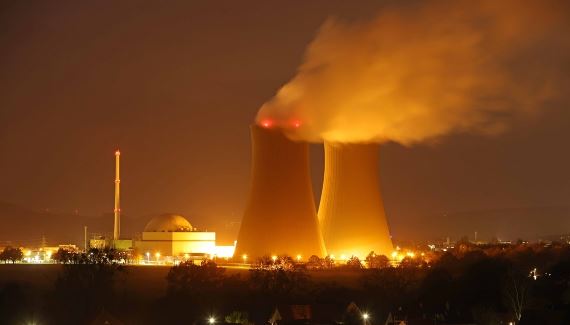
Uranium reserves found naturally are on a course to reach exhaustion. (Photo: Getty)
They collected seawater from the Arabian Sea (Juhu beach), Mumbai for uranium extraction and the absorbent resulted in a record uranium uptake capacity of 28.2 mg per gram in only 25 days and "satisfies the remarkable uranium extraction from seawater standard only in 2 days compared to existing adsorbents including commercially available materials reported so far."
"Combined with exceptional selectivity, record capacity, ultrafast kinetics, and long service life, this material could be a potential candidate for the efficient extraction of uranium from natural seawater. The selective ion exchanged harvesting method introduces the concept of extracting uranium from natural seawater may lead to an unlimited supply of uranium at an economically affordable cost," Professor Sujit K. Ghosh, who was part of the study, told media.
(With inputs from agencies)