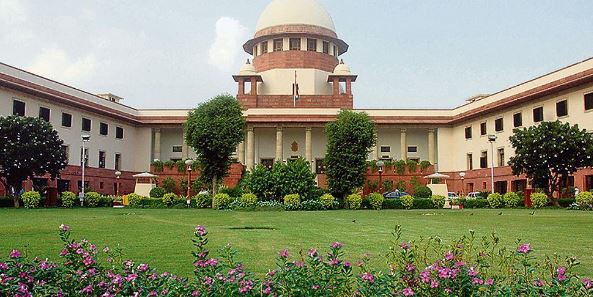
The Supreme Court on Wednesday raised eyebrows over an order by the Allahabad High Court, which dismissed a plea for anticipatory bail filed by five accused in a criminal case while granting them protection against coercive steps for two months. The Supreme Court even deemed the order "self-contradictory."
Supreme Court 'amazed' at Allahabad High Court order, terms it self-contradictory
Story by India Today News Desk • Yesterday 11:29 pm
The case in question was registered in Saharanpur district under the provisions of the Uttar Pradesh Gangsters and Anti-Social Activities (Prevention) Act, 1986. In May last year, the high court rejected the anticipatory bail application of the five accused.
Following the rejection, the counsel for the accused requested the high court to grant them the liberty to move a discharge application, seeking assurance that no coercive measures would be taken against them during its disposal.
"In view of the above, it is provided that the applicants may move discharge application as aforesaid. For a period of two months from today no coercive measures shall be adopted against applicants," the high court order read.
The state later appealed against this high court order, which was heard in the Supreme Court before a bench of Justices B R Gavai and J B Pardiwala on July 18.
Gyan vapi masad pariser keisai survey Khilaaf dariat chika yadaya
"We are amazed to see the order passed by the single judge of the High Court of Judicature at Allahabad," news agency PTI quoted the Supreme Court as saying in its judgment.
The Supreme Court observed that the application for anticipatory bail filed by the accused was vehemently opposed by the state's counsel, who argued that the accused had a history of crime and were hardened criminals, with lookout notices issued against them.
The Supreme Court further said that after hearing both sides, the high court had initially rejected their anticipatory bail application.
"However, after the application was rejected, a motion was made on behalf of the respondent(s) that they would like to move an application for discharge. The single judge of the high court, while rejecting an application for anticipatory bail, in the same breath granted them protection for a period of two months," the bench said.
"It is, thus, clear that self-contradictory orders have been passed by the high court. On the one hand, the application for anticipatory bail is rejected and, on the other hand, the interim protection is granted for a period of two months," it said.
The Supreme Court bench allowed the appeal and quashed the part of the high court order that provided protection against coercive steps for two months to the accused.
(With inputs from agencies)