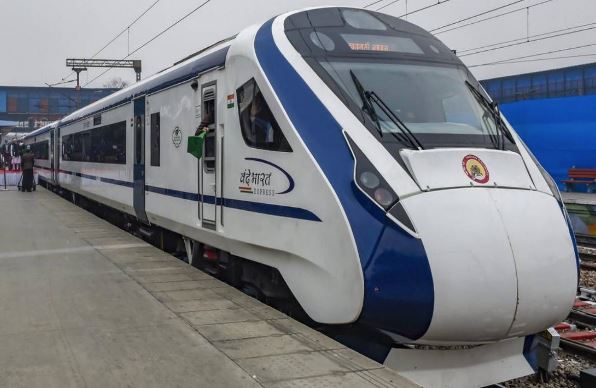
Union Finance Minister Nirmala Sitharaman has allocated a capital outlay of Rs 2.40 lakh crore for the Indian Railways in the Union Budget 2023-24. This highest-ever outlay is about nine times the outlay made in Financial Year 2013-14. Till 2014, Railways’ capital expenditure was barely Rs 45,980 crore annually. Presently, there are a lot of projects going on across the country. In the coming years, the capex will increase further and the railway system will actually emerge as an engine of national growth.
The railways will also witness more private investment in the infrastructure sector. For this, the newly established Infrastructure Finance Secretariat will assist all stakeholders including railways, roads, urban infrastructure, and power, which are predominantly dependent on public resources.
This is going to be the last full Budget of the Narendra Modi 2.0 government. In 2016, the Prime Minister Narendra Modi-led government decided not to present a separate Railway budget. Suresh Prabhu was the last Railways Minister to present a separate Railway Budget.
Railways Minister Ashwini Vaishnaw has announced redeveloping 1,275 railway stations across the country under the Amrit Bharat scheme. Some of the major station under the redevelopment stage are – New Delhi, CSMT, Puri etc
Raj Kumar, Chairman and Managing Director, Rodic Consultants said “The budget announcement by the Hon’ble Finance Minister Smt Nirmala Sitharaman is extremely progressive and the government has continued its focus on steps to help the economy by prioritizing infrastructure as one of the Saptrishi (7 Priorities of the union budget 2023). The Budget has rightly focused on ramping up infrastructure creation to provide a boost to revive economic growth. The new outlay of 10 Lakh Crore of infrastructure will aid in the development of the country. There will be 100 new projects for Last Mile connectivity for ports, coal, steel, fertilizers sector. To spur investment in infra at states 50-year interest free loan also continues.”
“The government announced various investment-based programs across crucial infrastructure sectors, including urban development, logistics, technology ecosystem and green projects. At the same time, focusing on reaching the last mile, empowering fintechs, and tax incentives strengthen its inclusion agenda,” said MS Sreedhar.
(With inputs from agencies)