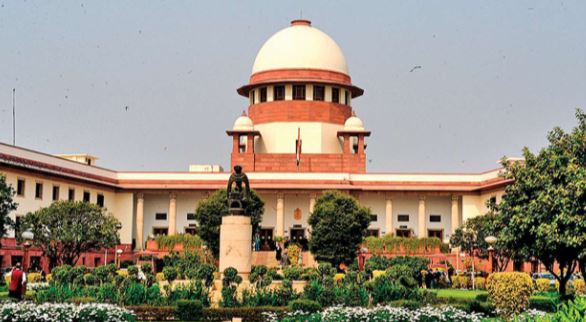
Judges appointed to the Supreme Court usually get a tenure of 4-5 years but this is not enough to understand the working of the top court, justice L Nageswara Rao said in his retirement speech on Friday. He headed the bench that had ordered the release of Rajiv Gandhi assassination convict AG Perarivalan two days ago.
A former Ranji player who has even acted in films, justice Rao completed six years as a judge of the top court. He was elevated to the Supreme Court as a judge directly from the Bar in March 2016, which resulted in the extended tenure. Before him, this distinction was enjoyed by six senior lawyers.
“Now that I have retired, I can say on the issue of whether judges of the top court should retire at 65 years; Look at it from a different dimension,” justice Rao said at the farewell function organised for him by the Supreme Court Bar Association.
“Judges who come to Supreme Court from the high courts, on an average get 4-5 years. By the time they understand how this Court functions, they face retirement. You are deciding matters of huge importance for the country and citizens. How this can be done? Either by increasing retirement age or who have a clear 7-8 year term could be brought to the SC,” Justice Rao said in his farewell speech.
Though he will retire on June 7, the function was organised on Friday as it was the last working day before the Court breaks for vacation.
Speaking to a packed hall with more than 600 people, Justice Rao shared his experience of acting in a film while he was into theatre at college and said “All of you know, lawyers act in Court and judges also act when they have to bring a truce when opposite lawyers raise their voices during arguments.”
Chief Justice of India (CJI) NV Ramana recalled landmark decisions given by justice Rao, saying, “He likes to be an independent lawyer. But even as a judge, he worked hard and decided cases boldly and independently.” Some important judgments of justice Rao include the direction on vaccine mandates that no citizen can be forced to be vaccinated as it affects their right to bodily integrity.
“His keen analytical skills and passion for the cause of justice will be thoroughly missed by all of us,” CJI Ramana said, making a reference to the judgment striking down the Maratha quota, decisions sitting in Constitution benches holding re-promulgation of Ordinances and appealing for votes in name of religion, race, caste, community or language as unconstitutional.
As a lawyer, justice Rao was part of Justice Mukul Mudgal committee that probed spot fixing in IPL T-20 cricket format.
“He was the force behind ensuring that the tribunal structure in India is upheld through his judgment in Madras Bar Association case (2021)…. He also made significant contribution in streamlining criminal trials in the country. He was part of two different Benches which dealt with this subject, and issued various guidelines,” CJI said.
Stating that he and Justice Rao shared many things in common being of the same age, state and background, the CJI said, “I am losing a best friend and advisor who stood by me in my every need,”
Attorney General KK Venugopal said that Justice Rao made a huge sacrifice by becoming a judge as he had a roaring legal practice, having successfully reversed a conviction against former Tamil Nadu chief minister J Jayalalithaa in the disproportionate assets cases.
Venugopal said that as a judge, Justice Rao was part of 552 benches that churned out significant judgments and described him as an “extraordinary lawyer” who served twice as additional solicitor general (ASG) and a “deeply learned judge”, besides being a talented cricketer. The team of judges led by Justice Rao had for the first time defeated the SCBA team this year.
Justice Rao also gave judgments on providing ration and rehabilitation to sex workers during Covid-19, caring for education of children orphaned during the pandemic, and rehabilitation of street children — which is still an ongoing process in a suo motu case before the top court.
SCBA president and senior advocate Vikas Singh said that justice Rao has a diverse personality and was principled as his juniors did not appear before his court while his son-in-law, a practicing lawyer in the SC shifted base to the Andhra Pradesh high court after Rao was appointed judge.
Justice Rao said that he never regretted his decision to join legal profession. “I really love being a lawyer. The job of a judge is such that we have to be harsh and impertinent at times. The pressure of work sometimes gets on us,” he said.Speaking to a packed hall with more than 600 people, Justice Rao shared his experience of acting in a film while he was into theatre at college and said “All of you know, lawyers act in Court and judges also act when they have to bring a truce when opposite lawyers raise their voices during arguments.”
Chief Justice of India (CJI) NV Ramana recalled landmark decisions given by justice Rao, saying, “He likes to be an independent lawyer. But even as a judge, he worked hard and decided cases boldly and independently.” Some important judgments of justice Rao include the direction on vaccine mandates that no citizen can be forced to be vaccinated as it affects their right to bodily integrity.
“His keen analytical skills and passion for the cause of justice will be thoroughly missed by all of us,” CJI Ramana said, making a reference to the judgment striking down the Maratha quota, decisions sitting in Constitution benches holding re-promulgation of Ordinances and appealing for votes in name of religion, race, caste, community or language as unconstitutional.
As a lawyer, justice Rao was part of Justice Mukul Mudgal committee that probed spot fixing in IPL T-20 cricket format.
“He was the force behind ensuring that the tribunal structure in India is upheld through his judgment in Madras Bar Association case (2021)…. He also made significant contribution in streamlining criminal trials in the country. He was part of two different Benches which dealt with this subject, and issued various guidelines,” CJI said.
Stating that he and Justice Rao shared many things in common being of the same age, state and background, the CJI said, “I am losing a best friend and advisor who stood by me in my every need,”
Attorney General KK Venugopal said that Justice Rao made a huge sacrifice by becoming a judge as he had a roaring legal practice, having successfully reversed a conviction against former Tamil Nadu chief minister J Jayalalithaa in the disproportionate assets cases.
Venugopal said that as a judge, Justice Rao was part of 552 benches that churned out significant judgments and described him as an “extraordinary lawyer” who served twice as additional solicitor general (ASG) and a “deeply learned judge”, besides being a talented cricketer. The team of judges led by Justice Rao had for the first time defeated the SCBA team this year.
Justice Rao also gave judgments on providing ration and rehabilitation to sex workers during Covid-19, caring for education of children orphaned during the pandemic, and rehabilitation of street children — which is still an ongoing process in a suo motu case before the top court.
SCBA president and senior advocate Vikas Singh said that justice Rao has a diverse personality and was principled as his juniors did not appear before his court while his son-in-law, a practicing lawyer in the SC shifted base to the Andhra Pradesh high court after Rao was appointed judge.
Justice Rao said that he never regretted his decision to join legal profession. “I really love being a lawyer. The job of a judge is such that we have to be harsh and impertinent at times. The pressure of work sometimes gets on us,” he said.
(With inputs from agencies)