Realising the danger behind high courts setting aside elections in public interest litigations (PIL) after election results are declared, the Supreme Court on Monday stayed an order of the Calcutta high court directing forensic audit of CCTVs used in the Contai municipal elections and said that a PIL cannot substitute an election petition which is the procedure provided under law to set aside an election.
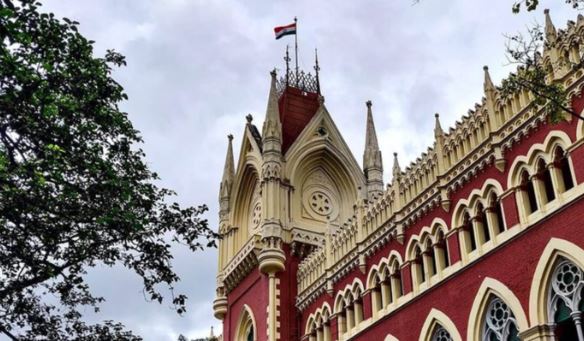
The Supreme Court on Monday stayed an order of the Calcutta high court directing forensic audit of CCTVs used in the Contai municipal elections in West Bengal. (HT PHOTO.)
The order was passed on an appeal filed by the West Bengal state election commission (WBSEC) which approached the top court against an April 26 order by the HC directing forensic audit of the CCTV footage at all polling booths in the Contai municipality by the central forensic science laboratory (CFSL) at Delhi. The order came on a PIL filed by BJP general secretary Soumendu Adhikari alleging large scale rigging of votes, violence and alleged threats to voters by persons associated with the ruling Trinamool Congress.
The bench of justices Dhananjaya Y Chandrachud and Surya Kant said, “You cannot subvert the election process by going to high court under Article 226 (power of high courts to issue writs). Your relief in PIL is to set aside the elections. Your allegation may be serious but these are disputed questions which have to be proved in an election petition. We need to ensure that the electoral process is not tinkered with.”
Senior advocate PS Patwalia appearing for the PIL petitioner said, “Exceptional circumstances require exceptional action. Here is a general secretary of a party who says such violence is repeatedly happening. The state election body conceded to the audit before the high court and it is surprising that now they do not want the truth to come out.”
The WBSEC contested this claim and raised a constitutional challenge to the HC order. Senior advocate Rakesh Dwivedi representing the state poll body said, “The high court has transgressed the limits of its jurisdiction under Article 226 after results were declared. He further stated that neither an elector nor a candidate of the election had challenged the election as required for filing of an election petition under the Representation of Peoples Act, 1951. “Here is a PIL challenging election to eight wards and HC extends it to 82 wards without any prima facie conclusion that the CCTV was tampered with,” he added.
The bench said, “This will set a dangerous precedent across the political spectrum. After election results are declared, there will be such petitions to set it aside. This will be extremely dangerous in a PIL. As a constitutional court we are not just concerned about the Contai elections.”
The bench envisaged a situation where somebody makes an allegation against electronic voting machines in a PIL and seeks to set aside the election alleging rigging. “Our democracy rests on faith of common citizens in the electoral process. This will damage the entire fabric of elections, not only in municipality but assembly and Parliament elections as well,” the bench added, while issuing notice to Adhikari.
Posting the matter in July, the bench said, “The issue as to whether the directions of the high court can substitute the proceedings under law that provides for filing of election petitions would merit further consideration. We issue notice. Pending further orders, there shall be stay of the HC order and further proceedings before the HC in the PIL.”
The high court had issued a slew of directions, besides audit of CCTVs, which required an observer to be appointed at each booth, who is an officer of the Indian administrative service (IAS) outside West Bengal cadre. The top court said that in the past, when faced with violence prior to polls in Tripura and West Bengal, orders were passed for CCTVs and posting of paramilitary forces, but all these directions were before the conduct of polls to ensure free and fair elections.
Patwalia informed the Court that the order under challenge was part of a series of orders passed by the HC during the hearing of the PIL. The bench asked Adhikari if he was a candidate and said that the candidate of his party was free to raise this issue in an election petition where evidence can be produced to prove the charges. This exercise cannot be done by the HC in a PIL, the bench added.
(With inputs from agencies)