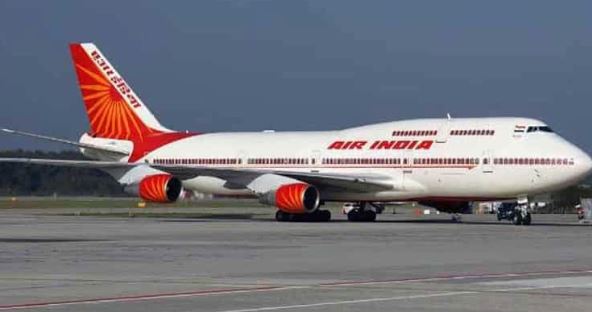
The two latest instances of men urinating on female fellow passengers on two separate Air India flights have sparked significant outrage. The aviation regulator, Directorate General of Civil Aviation (DGCA), slammed the Tata Group-owned airline, stating its behaviour was "unprofessional" and resulted in "systemic failure" in reference to the November incident where a drunken male is reported to have urinated on a senior citizen. NDTV stated quoting the First Information Report (FIR) that despite the incident taking place late last year (November 2022), Air India finally reported it to the police on 4 January 2023 against the offender, a Mumbai-based businessman named Shankar Mishra.
In addition to imposing a 30-day flying ban on the businessman, Air India has begun an investigation into the event that happened on one of its flights from New York to Delhi on 26 November 2022.
Mishra has also been fired by his employer Wells Fargo on Friday.
“Wells Fargo holds employees to the highest standards of professional and personal behavior and we find these allegations deeply disturbing. This individual has been terminated from Wells Fargo. We are cooperating with law enforcement and ask that any additional inquiries be directed to them," the American bank said in a statement.
A similar incident occurred on an Air India flight between Paris and Delhi in December of last year when a male passenger who was allegedly intoxicated urinated on a female passenger's blanket.
Airport authorities told news agency PTI that the man was detained by the Central Industrial Security Force (CISF) as the plane touched down but was subsequently released after the two passengers reached a "mutual solution" and the accused provided a "written apology."
What are Air India's forward-plans and DGCA's statutory amid such incidents?
In a letter to Air India's staff, airline CEO Campbell Wilson emphasised that anyone who violates the flight regulations will be subject to prompt action. He emphasized the significance of reporting unfavourable situations on flights to authorities, even if the crew thinks the issue has been rectified.
The Directorate General of Civil Aviation (DGCA) issued a warning on Friday outlining how to deal with unruly passengers on board and who is responsible for what under the rules. All scheduled airlines' operational chiefs received the advisory. The DGCA instructed airlines to deploy restrictions whenever all conciliation efforts had failed.
The statutory body said, "In the recent past, DGCA has noticed a few incidents of unruly behaviour and inappropriate conduct by the passengers on board the aircraft during flight, wherein it is observed that post holders, pilots and cabin crew members have failed to take appropriate actions."
The DGCA stated that the pilot of an aircraft is in charge of maintaining flight safety, crew member safety, and the safety of passengers and goods carried by aircraft. Notably, many provisions of the 1937 Aircraft Rules, DGCA rules, circulars, and airline manuals specify a person's responsibilities for dealing with a disruptive passenger.
The cabin crew must diffuse a critical situation, according to the DGCA's additional statement. The statutory body further stated that restraining devices should only be used after all other conciliatory measures have failed. In the meanwhile, it is the Director-in-Flight Services' responsibility to notify the DGCA of such situations in the manner specified by Cabin Safety Circular 02/2010.
Upon landing of the aircraft, airline representative shall lodge FIR with the concerned security agency at aerodrome, to whom, the unruly passenger shall be handed over," the DGCA said.
What will land a passenger on the no-fly list?
In accordance with the DGCA, instances of unruly behaviour include intentionally interfering with a crew member's performance of their duties, smoking inside an aircraft, using threatening or abusive language toward a crew member or other passengers, consuming alcohol or drugs that may cause disruption, and more.
Level 1, 2, or 3 behaviours have been designated as disorderly and will determine the length of the suspension.
Physical gestures, verbal abuse, and disorderly inebriation are examples of Level 1 behaviours. An up to three-month suspension may result from this.
Level 2 physical abuse, which includes "pushing, kicking, striking, grabbing or unwanted touching or sexual harassment," will result in a six-month suspension.
Level 3 behaviours include those that pose a risk to one's life, such as endangering the aircraft's operational systems and engaging in "physical violence, including choking, eye gouging, deadly attack, attempted or successful breach of the flight crew compartment, etc." In such a case, the prohibition may last for a minimum of two years or longer might be permanent.
According to PTI, the Ministry of Home Affairs can also give the DGCA and the airlines a list of those who have been deemed "national security concerns" so they can be put on the no-fly list.
So far, only one Mumbai jeweller has been added to the no-fly list thus far, according to a report in The New Indian Express from 2020.
On a Jet Airways aircraft from Mumbai to Delhi in 2017, multimillionaire Birju Kishore Salla falsely claimed there were hijackers and explosives in the cargo hold. Salla placed the letter in the lavatory. As a result, the aircraft had to make an emergency landing at Ahmedabad Airport.
He was also prosecuted under the new Anti-Hijacking Act of 2016, making him the first individual to be placed on the no-fly list.
(With inputs from agencies)