New Delhi:Annual reclamation of ‘who we are; the 10th edition of the Delhi Queer Pride organised by the Delhi Queer Pride Committee will be held on Nov 12 and like last year, the march will start at the intersection of Barakhamba Road and Tolstoy Marg in central Delhi, so block your calendars.
The Pride is an independent community funded event that unites like-minded individuals from across different backgrounds to show solidarity, dispel social norms, raise awareness and empower those who feel marginalised. At the heart of it, the Queer Pride is an event that celebrates individual identities and advocates for the freedom to love.
Basically, the Queer Pride Parade is an occasion to celebrate the freedom to be who you are and feel proud of the sexual orientation you are born with.
According to an earlier statement on the Face book page created for the event, Delhi’s 10th Queer Pride march invites you to dance, flirt, love, and share all your rainbow feelings on the streets of Delhi. This pride represents a milestone 10 years of collective struggle to battle all forms of shame, stigma, transphobia, homophobia, and socio-economic hierarchy, at a time when such an assertion of dignity and self-respect grows in need and vitality.
The organizer of the march is a voluntary collective of individuals and according to them, the parade overall had two main objectives: first, to celebrate the diversity of sexuality and gender; second, to protest the harassment and discrimination the community faces.
This Year's March Has The Followings Demands:
Hate crime legislation that conceptualizes all forms of anti-minority violence as specifically punishable offences.
Comprehensive anti-discrimination legislation and social accountability for discrimination on the basis of gender, class, caste, religion, ability, race, tribe, sexual orientation, and ethnicity.
Effective implementation of the provisions of the Supreme Court judgment in NALSA vs. Union of India and serious revisions to the currently draconian form of the Trans rights bill according to inputs and suggestions by the community.
Read down Section 377 of the Indian Penal Code, repeal Karnataka Police Act 36 A and Hyderabad Eunuch Act, anti-beggary, anti-Hijra laws, sedition laws, UAPA and AFSPA, and remove the marital rape exception from rape laws which should offer redressal to all victims/survivors of sexual assault irrespective of gender.
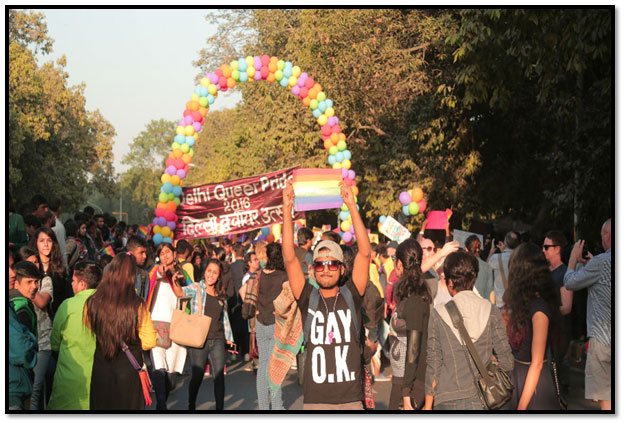
Every year the parade had the zest of a wedding celebration, complete with drum beats and dancing. But in the midst of the festivities, there was also sloganeering. The chants loosely reflected the demands put forth by the Delhi Queer Pride Committee, which organised the march.
The march was a vibrant mix of young college students, middle-aged folks, and a smattering of older folks. Some were loud and brazen, others shy and sophisticated, some danced unabashedly and some had to be coaxed into the celebrations. Even a handful of foreigners were spotted every year in the crowd, along with many media persons and photographers. There was a lot of handholding, embracing and exclamations of joy each year and they demanded the repealing of laws that are considered discriminatory to people who identify as queer – for example, Section 377, which criminalises homosexuality.
In 2009 the New Delhi High Court had declared Section 377 of the Penal Code, which criminalizes homosexual acts, as unconstitutional. The judgment was overturned four years later when India's Supreme Court decided that amending or repealing Section 377 should be left to the parliament and not the judiciary. The march in Delhi that saw a burst of colours highlighted the continuing discrimination against the LGBTQ community in India.
History of Last Nine Queer Pride March’s in Delhi:
2008: Delhi's first Queer Pride March took place on June 30, 2008. In the beginning, only a small bunch of men and women arrived and police was also there, but by evening, there were about 500 people singing, dancing, shouting slogans, holding placards, screaming "377, quit India".
2009: The second Delhi Queer Pride was held on June 28, 2009.
2010: The third Delhi Queer Pride was held on November 28, 2010.
2011: The fourth Delhi Queer Pride was held on November 27, 2011. The march ended in JantarMantar with a reading of the “Charter of Demands for LGBT Rights” and a two-minute silence for those who died in the recent NandNagri fire tragedy.
2012: The fifth Delhi Queer Pride was held on November 25, 2012, followed by a picnic near India Gate. The theme for the march was Gender Variance and Identity and Expression.
2013: The sixth Delhi Queer Pride was held on November 24, 2013. Around 700 people marched from Barakhamba Road to JantarMantar.
2014: The seventh Delhi Queer Pride held on November 30, 2014, was the first pride march after the Supreme Court reinstated Section 377 of the Indian Penal code, which criminalises 'unnatural sex'. The community walked to reinforce their identities with this year's theme 'No going back.Around 700 people danced and walked against Section 377.
2015: The eighth Delhi Queer Pride was held on November 29 and kickstarted from Tolstoy Marg at 2 PM.The march saw hundreds of LGBTQIA+ (Lesbian, Gay, Bisexual, Transgender, Queer, Intersex, Asexual) people and allies walk the two-km stretch from Barakhamba road to JantarMantar, ending with a range of performances. The statement that year talked about freedom not just from Section 377, but freedom from all social injustices.
2016: On November 27, 2016, the ninth Delhi queer pride took place on the streets of New Delhi from Barakhamba Road to Tolstoy Marg. This march saw a larger turnout, where about 800-1000 people turned up. Members of the LGBTQIA+ (Lesbian, Gay, Bisexual, Transgender, Queer, Intersex, and Asexual) community as well friends and families came with placards, masks and costumes. The march demanded freedom and solidarity for Dalits, Muslims, women, disabled, Kashmiris, and people in the North-East, Adivasis, academics, filmmakers and students.
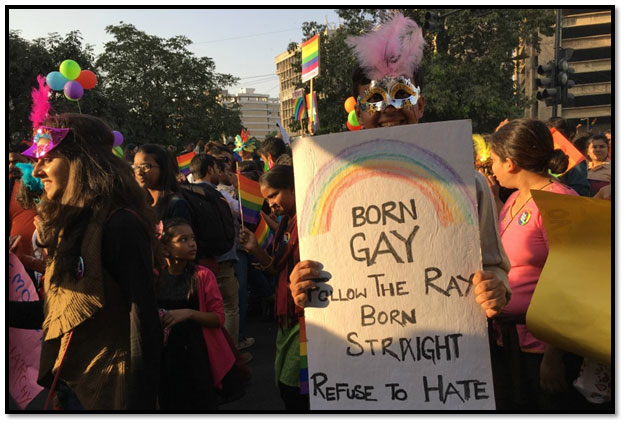
Lastly, the parade is a yearly festival, held by members of the Delhi LGBT community every November since 2008, to honour and celebrate lesbian, gay, bisexual, transgender, intersex and many gender and sexual non-conforming people, along with their supporters.
So, if you’re someone who believes in the all for love and love for all kind of world, be sure to attend the march, and bring friends along too.
References:
https://en.wikipedia.org
https://www.thebetterindia.com
https://www.ndtv.com
http://www.firstpost.com
http://delhipride.org