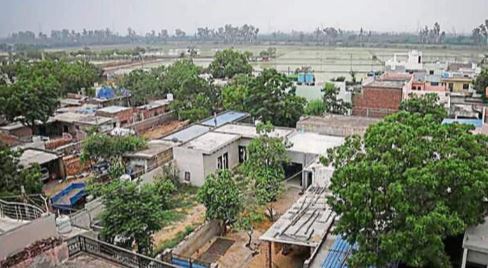
Even as the Delhi Development Authority (DDA) is struggling to operationalise the land pooling policy that was notified in 2018, the agency has decided to start work on preparing the mobility plan for areas that will be developed under the policy.
A senior DDA official said the land-owning agency is in the process of appointing a consultant to prepare the plan for mobility and a drainage network.
“The consultant will have to undertake a drone survey of the areas under land pooling and prepare a plan for city level road network in the zone. They will also have to carry our feasibility studies of the overall project and suggest ways to Integrate the proposed road network with the existing road network,” said a senior DDA official.
There are 110 villages on the outskirts of the city that will be developed under the land pooling policy, aimed at meeting the city’s growing housing requirement. Close to 17 lakh dwelling units are likely to come up under the policy.
A second DDA official said, “The first plan will be prepared for the L zone which has villages such as Dichaon Kalan, Jhuljhuli, Najafgarh, Roshanpura, Khaira etc. The zone has 22,000 hectare of land.”
The DDA has again invited a Request for Proposal for the preparation of the mobility plan. “We have invited the bids again, as we didn’t get a good response last year. Now that we have reopened the registration process, we are hopeful that we will be able to meet the target to operationalise the policy. But to operationalise the policy, it is important to get the transportation plan sorted.”
The detailed project report will also take into account the estimated growth in traffic volume because of the new developments in the next three decades. The authority also said that a drainage network plan is in the works along with the transportation plan.
Paras Tyagi, who heads the Centre for Youth Culture and Law and Environment (CYCLE), a policy research group working in villages of Delhi, said that without providing proper connectivity to villages, the future will remain uncertain. “A large number of villages in the area are not well-connected with the rest of the city. There is a need for a proper route connecting southwest Delhi villages with West Delhi. Currently, people have to navigate through the traffic at Najafgarh while going to west Delhi. Also, the Metro network is available till Najafgarh only. It needs to be extended.”
Citing the example of villages in Najafgarh area, Tyagi said, “To begin with, a simple idea of providing Metro feeder buses from villages which are 15-18km from Najafgarh station can assure the villagers public services are extended for them.”
Meanwhile, the DDA is carrying out a study to assess the water requirement of new areas that will come up in the city. The report for the first phase is likely this year.
(With inputs from agencies)